
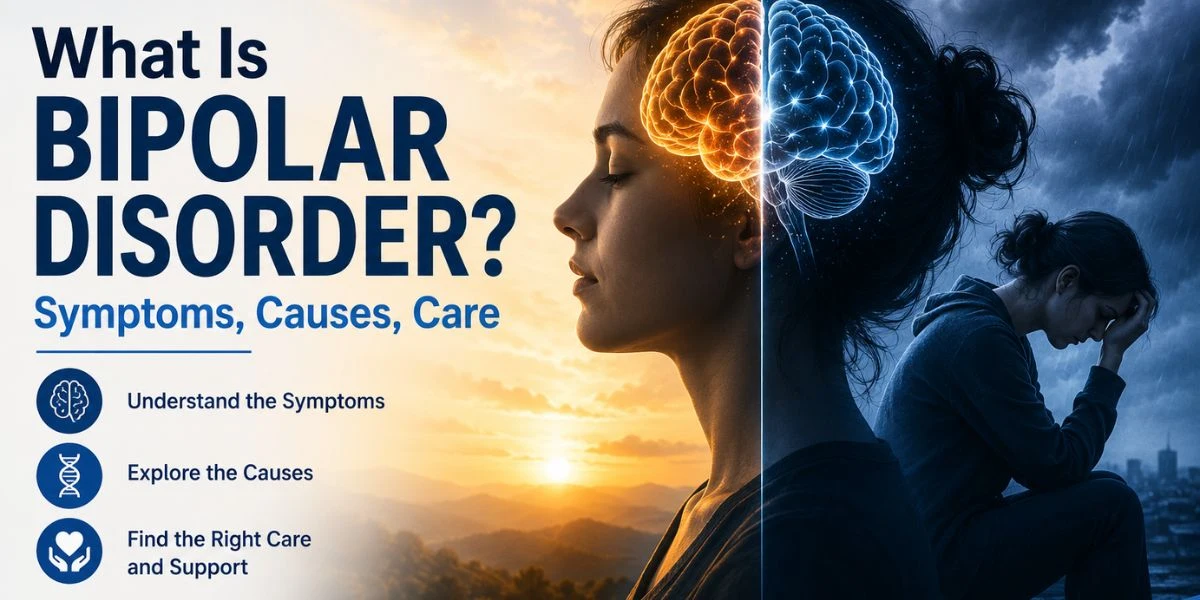
Bipolar disorder is a mood disorder that causes a person’s mood, energy, and activity levels to shift between two extremes: manic or hypomanic highs and depressive lows. These changes are not just mood swings. Episodes occur for days, weeks or months and interfere with sleep, judgement, relationships and work.
Bipolar disorder is a health problem, not a personality or character flaw. It is related to a combination of genes, brain chemistry and environmental stress. Most people can control it and live stable and functional lives with an accurate diagnosis and consistent treatment.
Recognizing the Signs of Bipolar Disorder
A manic episode is a period of unusually elevated, expansive, or irritable mood that lasts for at least one week and is accompanied by a significant increase in energy or activity. During this time, a person may feel unusually confident, need very little sleep without feeling tired, and experience racing thoughts or rapid speech.
Many people become easily distracted and may make impulsive decisions, such as excessive spending, risky sexual behavior, or unrealistic business investments, without fully considering the consequences.
In severe cases, mania can progress to psychosis, causing hallucinations or delusions that impair judgment and make it difficult to distinguish reality from false beliefs. Because severe manic episodes can pose a risk to the individual’s safety or the safety of others, hospitalization may sometimes be necessary to provide stabilization and appropriate psychiatric care.
Hypomanic Episode Symptoms
Hypomania looks like mania but is shorter, at least four consecutive days, and less severe. The person may feel unusually productive, social, or energetic. Friends and family often notice the change before the person does, since hypomania rarely causes major impairment on its own.
Depressive Episode Symptoms
A depressive episode involves at least two weeks of low mood or loss of interest, plus symptoms such as fatigue, sleep changes, appetite changes, poor concentration, feelings of worthlessness, and in some cases suicidal thoughts. Depressive episodes are usually what bring people into treatment, since low mood is more disruptive to daily functioning than a manic high.
Mixed Features: When Symptoms Overlap
Some episodes combine manic and depressive symptoms at the same time, such as high energy alongside hopelessness. This mixed presentation increases the risk of impulsive behavior and requires careful clinical attention.
The 4 Types of Bipolar Disorder, Compared
Bipolar disorder is not one condition with one pattern. The DSM-5 recognizes four main types.
| Type | Defining Feature |
| Bipolar I | At least one full manic episode, often with depressive episodes too |
| Bipolar II | At least one hypomanic episode and one major depressive episode, no full mania |
| Cyclothymic Disorder | Chronic, milder mood swings for two years or more that never meet full criteria for mania or major depression |
| Other Specified/Unspecified | Symptoms that cause distress but don’t fit the exact pattern of the categories above |
Bipolar II is frequently missed because hypomania rarely feels like a problem to the person experiencing it. The depressive episodes get treated, the hypomania gets overlooked, and the diagnosis becomes depression instead of bipolar disorder.
What Causes Bipolar Disorder?
There is no single cause. Research points to three overlapping factors.
Genetic Factors: Bipolar disorder runs in families. Having a parent or sibling with the condition raises risk substantially, though genetics alone do not determine who develops it.
Brain Chemistry and Structure: Imaging studies show differences in brain regions that regulate mood and impulse control in people with bipolar disorder. Neurotransmitter systems, particularly those involving dopamine and serotonin, appear to play a role in triggering episodes.
Environmental and Life Stress Triggers: Sleep disruption, major life stress, substance use, and trauma can all trigger an episode in someone already biologically vulnerable. This is why sleep protection and stress management are core parts of long-term treatment, not just extras.
How Is Bipolar Disorder Diagnosed?
Diagnosing bipolar disorder requires a comprehensive psychiatric evaluation performed by a qualified mental health professional. There are no blood tests, brain scans or single laboratory tests that confirm the condition. Rather, health care professionals will carefully consider an individual’s symptom pattern, history, and overall mood over the course of time to make a diagnosis.
The clinician will inquire about history of manic, hypomanic, and depressive episodes, as well as family history of mental illness during the evaluation. They will also check your sleep patterns, drug and alcohol use, medications, and medical history to learn about other factors that might contribute to making you feel moody. In some cases, standardized screening tools, such as the Mood Disorder Questionnaire (MDQ), are used to identify symptoms associated with bipolar disorder. These questionnaires are not essential for a diagnosis, but are used to help with the evaluation.
Your healthcare provider may also recommend blood tests or a physical examination to rule out medical conditions, such as thyroid disorders or vitamin deficiencies, that can cause symptoms similar to bipolar disorder. A thorough psychiatric evaluation helps ensure an accurate diagnosis and allows your provider to develop a personalized treatment plan based on your specific symptoms and needs.
Why Bipolar Disorder Is Often Misdiagnosed as Depression
People typically seek help during a depressive episode, not a manic or hypomanic one, since low mood is what disrupts daily life. A clinician who only hears about the depressive side may diagnose major depressive disorder and prescribe an antidepressant alone. In someone with undiagnosed bipolar disorder, this can trigger a manic episode or speed up mood cycling. This is exactly why a thorough history, not just a symptom checklist, is essential at the first evaluation.
Bipolar Disorder Treatment That Actually Works
Treatment is not one-size-fits-all, and it is not short-term. Bipolar disorder is a chronic condition managed over a lifetime, similar to how diabetes is managed rather than cured.
Mood-Stabilizing Medication
Mood stabilizers such as lithium, along with certain anticonvulsants and antipsychotics, are the foundation of treatment. They reduce the frequency and severity of both manic and depressive episodes. Finding the right medication and dose often takes time and adjustment, and side effects need honest monitoring, not just a first prescription and a goodbye.
Psychotherapy
Medication controls symptoms. Therapy builds the skills to prevent relapse. Cognitive behavioral therapy helps identify early warning signs and correct distorted thinking during mood shifts. Family-focused therapy improves communication and reduces household stress, which lowers relapse risk. Psychoeducation teaches the person and their family how to recognize triggers before an episode escalates.
Lifestyle Structure and Relapse Prevention
Consistent sleep, a stable daily routine, and reduced substance use are not optional add-ons. They directly affect how often episodes occur. Mood charting, tracking sleep and mood daily, helps both the patient and psychiatrist catch early signs of an oncoming episode.
What Realistic Recovery Looks Like
There is no cure for bipolar disorder, and any provider claiming otherwise is not being honest. What treatment offers is real stability: fewer episodes, shorter episodes when they happen, and long stretches of steady mood. Most people need ongoing medication and periodic psychiatric visits indefinitely, even after symptoms improve. Stopping treatment during a stable period is one of the most common causes of relapse.
Bipolar Disorder Treatment in San Diego, CA
If you are noticing manic, hypomanic, or depressive patterns in yourself or a family member, an accurate diagnosis starts with a full psychiatric evaluation, not a guess based on a checklist. Blue Train Clinic provides bipolar disorder treatment in San Diego built on thorough evaluation, medication management, and therapy tailored to your specific pattern of episodes. Schedule a psychiatric evaluation with Blue Train Clinic to get a clear answer and a treatment plan that fits your history.
How to Support Someone With Bipolar Disorder
Watch for changes in sleep, spending, and speech pace rather than waiting for a crisis. Encourage consistent treatment instead of only stepping in during emergencies. Avoid arguing with someone mid-episode about whether they are “really” manic or depressed, since insight is often reduced during an episode. Support the routine: sleep schedule, medication timing, and follow-up appointments.
Conclusion
Bipolar disorder is treatable, but treatment only works when the diagnosis is right. If mood swings, energy shifts, or sleep changes have been disrupting your life or a loved one’s life, the next step is a full psychiatric evaluation, not another guess. Blue Train Clinic offers comprehensive bipolar disorder treatment in San Diego, from diagnostic evaluation through medication management and therapy. Contact Blue Train Clinic today to schedule an evaluation and start building a treatment plan around your actual symptoms.
FAQ’s
What is bipolar disorder in simple terms?
It is a mood disorder that causes intense shifts between high-energy manic or hypomanic states and low-energy depressive states, each lasting days to months.
What are the first signs of bipolar disorder?
Early signs often include reduced need for sleep, rapid speech, unusual irritability or euphoria, and later, a depressive episode with fatigue and low mood.
Can bipolar disorder be cured?
No. It is a lifelong condition. Treatment controls symptoms and prevents relapse, but it does not eliminate the underlying vulnerability.
Is bipolar disorder genetic?
Genetics increase risk significantly, especially with a first-degree relative who has the condition, but genetics alone do not cause it.
How do doctors diagnose bipolar disorder?
Through a full psychiatric evaluation covering mood history, family history, and standardized screening tools. There is no blood test for it.
Can someone with bipolar disorder live a normal life?
Yes. With consistent medication, therapy, and routine, most people with bipolar disorder maintain stable careers, relationships, and daily functioning.
What is the difference between bipolar 1 and bipolar 2?
Bipolar I includes at least one full manic episode. Bipolar II involves hypomania and major depression, without a full manic episode ever occurring.